

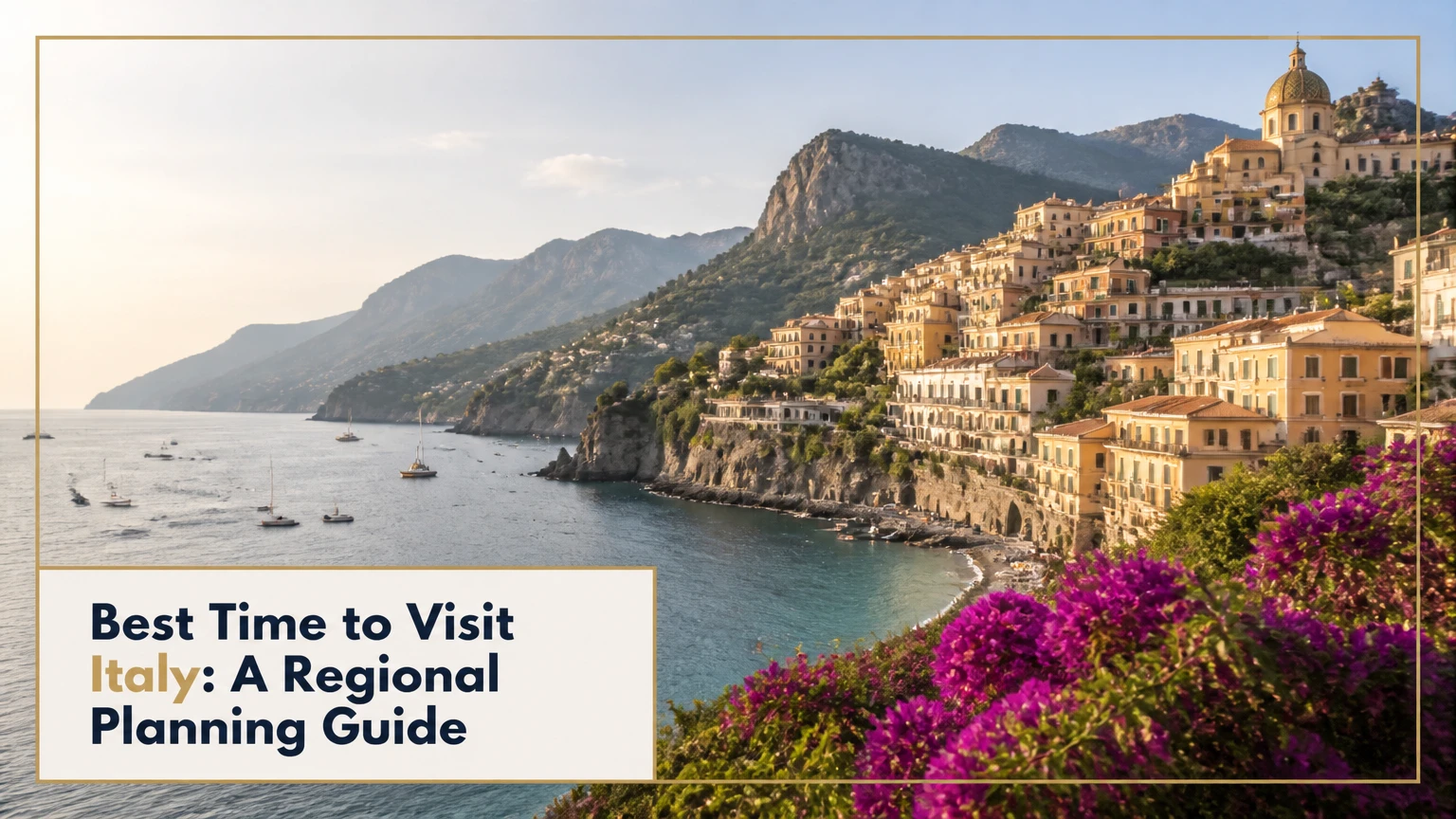
The best time to visit Italy is usually April to May or September to October, when mild walking weather, open attractions, and moderate demand overlap. September is the strongest all-purpose month for many travelers, while May favors art cities and October favors food, wine, and autumn scenery. Coastal and Alpine trips require different dates.
Key Facts
Best overall months: May, September, and early October.
Best for Rome, Florence, and Venice: April, May, late September, and October.
Best for warm beaches: June and September; July and August are hotter and more congested.
Best for skiing: December to March, with snow reliability varying by elevation.
Best for Alpine hiking: Late June to September, after high trails clear.
Lowest typical prices: The second half of January, February, and November, excluding major events.
How Italy’s Travel Seasons Work
Italy’s travel calendar combines climate, European school holidays, public holidays, and regional business patterns. High season brings the greatest visitor demand and hotel rates, shoulder season balances comfort with availability, and low season reduces prices while also shortening opening hours and limiting coastal services.
Italy is not one climate zone. Milan and the Dolomites can be cold while Palermo remains relatively mild, and a September beach holiday can coexist with rainy conditions in the northern lakes. The right date therefore depends on the route, not simply the national average.
| Travel season | Typical dates | Typical daytime conditions | Main trade-off |
|---|---|---|---|
| Low winter | January-February | 3-12°C in many cities; colder in northern Italy | Low rates, short daylight, coastal closures |
| Spring shoulder | April-May | 15-24°C in central Italy | Comfortable walking, Easter and May demand spikes |
| Summer high | June-August | 28-40°C in inland cities | Beaches operate fully, but heat and prices rise |
| Autumn shoulder | September-October | 15-30°C, cooling through October | Warm seas and harvests, earlier rain later in season |
| Low late autumn | November-early December | 8-18°C with frequent rain in many regions | Cheap urban stays, reduced rural and coastal services |
Italian Holidays That Change Demand
Ferragosto, celebrated on August 15, is the most important summer planning date. Italian residents often travel toward the coast and mountains, producing crowded beaches, busy highways, and high accommodation demand around August 10-20. Some independent shops and restaurants in major cities also close for part of August, although museums and international hotels generally continue operating.
Easter creates a shorter but sharper surge. Vatican City, Rome’s historic center, Florence, and major rail routes become especially busy during Holy Week. Christmas and New Year create a second peak, concentrated in markets, ski resorts, Venice, Rome, and Milan rather than distributed evenly across the country.
Expert insight: The phrase “Italy is empty in August” is only partly true. Rome may feel quieter in residential neighborhoods, but popular beaches, airports, motorways, and ferry routes can be exceptionally crowded. City quiet does not equal national low season.
What Is the Best Month for Italy?
September is the best single month for a broad first visit because central Italian cities are usually less punishing than in July, the Mediterranean remains warm, and vineyards and food festivals regain momentum. May is a close alternative for travelers who prioritize walking, gardens, and long spring days over the warmest sea temperatures.
The best month changes with the trip’s center of gravity. A museum-heavy itinerary benefits from April or May, a Sicily beach route from June or September, and a Dolomites hut-to-hut journey from late July through early September.
| Month | Strongest use | Typical planning conditions | Main reservation |
|---|---|---|---|
| January | Museums, opera, skiing | 3-12°C in central cities; low urban rates | Rain, cold evenings, coastal closures |
| February | Budget city breaks, Carnival | Cold north; mild intervals in the south | Venice Carnival can reverse low-season pricing |
| March | Early spring sightseeing | 12-18°C in Rome and Florence, typically | Changeable rain and limited beach services |
| April | Rome, Florence, gardens | 15-22°C; longer daylight | Easter crowds and higher Vatican demand |
| May | Walking, wine, lakes | 20-25°C in central Italy, typically | Advance booking needed for major attractions |
| June | Beaches, islands, hiking | 25-32°C; warm coastal water | Rising hotel rates and stronger sun |
| July | High-altitude hiking, festivals | 30-38°C inland, typically | Heat, queues, and peak prices |
| August | Beach resorts, Alpine escapes | 30-40°C inland; hot coasts | Ferragosto closures and congestion |
| September | Mixed itineraries, beaches, wine | 25-31°C early, cooler late | Popular routes require advance reservations |
| October | Food, wine, cities, foliage | 15-24°C; more rain risk | Some beach and ferry schedules reduce |
| November | Urban budget trips, truffles | 8-18°C; wet in many areas | Rural hotels and coastal venues often close |
| December | Christmas markets, skiing | 5-14°C in cities; snow at resorts | Christmas week prices and short daylight |
Best Time for Rome, Florence, and Venice
April, May, late September, and October are the most comfortable periods for Italy’s art cities because sightseeing involves hours of walking on stone streets with limited shade. July and August can bring inland temperatures above 35°C, while January and November offer shorter queues but more rain and reduced daylight.
Rome usually remains highly visitable year-round because its museums, churches, restaurants, and archaeological sites operate beyond the beach season. Florence rewards spring and autumn visits particularly strongly, since the historic center is compact and heat accumulates between masonry buildings. Venice is most comfortable in April-May and September-October, although acqua alta flooding and fog become more plausible in late autumn and winter.
| City | Best dates | Typical daytime range | Practical reason |
|---|---|---|---|
| Rome | April-May, late September-October | 18-28°C | Comfortable walking between outdoor ruins |
| Florence | May, September-October | 20-28°C | Better conditions for museums and hill viewpoints |
| Venice | April-May, September | 18-27°C | Lower heat stress on bridges and narrow streets |
| Milan | April-May, September-October | 18-27°C | Good balance for design, shopping, and day trips |
Reserve the Colosseum, Vatican Museums, Uffizi Gallery, and Doge’s Palace before arrival in May, September, and October. A practical sequence is:
- Select the region and expected weather before buying nonrefundable transport.
- Reserve accommodation near a rail station or walkable historic district.
- Book timed museum and archaeological-site tickets as soon as official calendars open.
- Put outdoor monuments early in the day during warm months.
- Keep one indoor museum or church option for rain.
- Recheck local closure days, strikes, and transport notices one week before departure.
Expert insight: In Rome and Florence, heat changes the value of a hotel more than a small rate difference. Air conditioning, reliable blackout shutters, and a location within 15 minutes of the evening route can prevent midday taxi costs and lost sightseeing time.
Best Time for Beaches and Coastal Routes
June and September are the strongest months for Amalfi Coast, Sicily, Sardinia, Puglia, and the Cinque Terre. June offers expanding ferry schedules and long daylight, while September usually provides warmer water, fewer family crowds after school resumes, and less severe inland heat.
July and August deliver the most dependable beach infrastructure, but they also bring the highest rates, crowded roads, packed ferries, and intense sun. November through March is a poor fit for a resort-style coastal trip because seasonal hotels, beach clubs, restaurants, and boat operators may close even when the weather is sunny.
| Coastal destination | Best period | Typical sea or weather advantage | Winter limitation |
|---|---|---|---|
| Amalfi Coast | May-June, September | Warm water and active ferries | Reduced ferries and closed restaurants |
| Sicily | May-June, September-October | Long swimming season, food events | Fewer island connections in winter |
| Sardinia | June-September | Reliable beach weather | Many seasonal properties close October-April |
| Puglia | June-September | Warm Adriatic water and dry weather | Rural masserie availability can fall sharply |
| Cinque Terre | May, September | Hiking and coastal rail access | Rain, slippery trails, limited boat service |
The Amalfi Coast has a transport problem that weather forecasts do not solve. A sunny day in November may still have reduced ferries, fewer buses, and closed restaurants, forcing travelers onto crowded roads or longer transfers. September usually gives the best operational balance.
For Sicily, divide the island into travel zones. Palermo and Catania support city visits in cooler months, while smaller beach towns and Aeolian Island connections become more seasonal. Sardinia and Puglia are especially dependent on summer demand, so October can be pleasant but operationally quieter than first-time visitors expect.
Best Time for Skiing in the Alps and Dolomites
December through March is the normal ski season in the Italian Alps and Dolomites, with the most reliable snow generally found at higher-elevation resorts. Christmas and New Year provide festive conditions but premium prices, January often offers quieter slopes, and March combines longer daylight with milder afternoons.
Snow varies by resort altitude and year. Cortina d’Ampezzo, Cervinia, Livigno, Alta Badia, and Val Gardena do not share identical conditions, so travelers should check the resort’s current lift and snow reports rather than relying on a national seasonal label.
| Ski period | Typical advantage | Typical price pressure | Best fit |
|---|---|---|---|
| December 20-January 6 | Holiday atmosphere and open resorts | Highest lodging and lift demand | Families with fixed school holidays |
| January 7-February | Quieter slopes and lower rates | Moderate, except weekends | Budget-conscious skiers |
| February | More daylight and school-holiday activity | High during European breaks | Families and mixed groups |
| March | Longer days and softer afternoon snow | Moderate to high | Intermediate skiers and photographers |
| Early April | Spring skiing at high resorts | Lower outside Easter | High-altitude resorts only |
Best Time for Hiking in the Dolomites
Late June through September is the main hiking window in the Dolomites because high passes and refuges need time to become snow-free and operational. July and August provide the fullest hut network, while September often improves trail quiet, photography conditions, and daytime comfort.
Early-season hikers must distinguish valley trails from high routes. A path around Ortisei or Lake Braies may be open while a route crossing a 2,500-meter pass remains snowy or requires equipment. Thunderstorms are common in summer afternoons, so start demanding routes early and check local mountain forecasts.
Goethe wrote in Italian Journey, covering his 1786-1788 travels, “To have seen Italy without having seen Sicily is not to have seen Italy at all, for Sicily is the key to everything.” The observation remains useful for planning: Italy’s regions are not interchangeable, and a national “best month” cannot determine island, mountain, and city conditions at once.
How Much Does an Italy Trip Cost by Season?
Typical North American round-trip airfare may fall around USD 450-700 in late January, February, or November and rise to USD 1,200-1,800 or more in July, but departure city, airline, booking date, and route can change the result substantially. Hotels show a similar pattern, with summer rates often double winter prices in high-demand destinations.
These are planning ranges, not guaranteed fares. A Milan flight can differ greatly from a Rome flight, and Venice during Carnival can cost more than Rome in ordinary July. The most useful comparison includes the complete trip rather than airfare alone.
| Expense category | Low season typical | Shoulder season typical | High season typical |
|---|---|---|---|
| North America airfare | USD 450-700 | USD 700-1,200 | USD 1,200-1,800+ |
| Mid-range double room | USD 90-180 | USD 140-280 | USD 220-450+ |
| Casual restaurant meal | USD 15-30 per person | USD 15-35 per person | USD 18-40 per person |
| High-speed rail, Rome-Milan | USD 35-90 one way | USD 45-110 one way | USD 60-140 one way |
| Major museum ticket | USD 15-35 | USD 15-35 | USD 15-35, plus timed demand |
Shoulder season can cost more than expected because the best-value rooms disappear first. Booking four to six months ahead is sensible for May through September, especially for the Amalfi Coast, Venice, Florence, Lake Como, and Dolomite refuges. For January or November, two to eight weeks may be adequate unless a festival or holiday intervenes.
Expert insight: A low-season airfare does not compensate for a short coastal itinerary if half the ferries and restaurants are unavailable. Urban winter trips usually capture more of the savings because museums and public transport remain useful.
Who Should Visit Italy in Winter?
January, February, and November suit travelers who prioritize low prices, uncrowded museums, food-focused city breaks, opera, or skiing over swimming and long evenings. Rome, Florence, Milan, Turin, Bologna, and Venice remain rewarding, although weather can be damp and daylight is limited.
Winter is less suitable for a route built around beach clubs, ferries, cliffside villages, or outdoor dining. Venice Carnival, usually held in February, changes the normal budget pattern, and Christmas markets raise demand in cities such as Bolzano, Merano, and Florence during December.
Pack for variable conditions rather than extreme cold in central and southern cities. A waterproof outer layer, shoes with good grip, and flexible indoor plans matter more than heavy expedition clothing for most urban routes.
May Versus July: Which Is Better?
May is better for a first Italy trip centered on walking, museums, gardens, and mixed regions. July is better for travelers whose priority is guaranteed summer infrastructure, late sunsets, Alpine hiking, or a full beach-resort experience and who accept higher prices and heat.
| Factor | May | July |
|---|---|---|
| Rome and Florence afternoons | Typically 20-25°C | Often 30-38°C |
| Hotel demand | Moderate to high | High to extreme |
| Beach infrastructure | Increasing toward full operation | Fully operational |
| Major-site queues | Manageable with reservations | Long even with reservations |
| Hiking conditions | Lower trails favorable; high snow possible | Most high trails open |
| Evening comfort | Usually pleasant | Warm, sometimes oppressive inland |
May can still be expensive around Easter, national holidays, and popular festival weekends. July rewards early starts, shaded lodging, and a slower itinerary, but scheduling three major outdoor sites in one afternoon is a common cause of exhaustion.
October Versus November: Which Is Better?
October is better for a balanced itinerary because cities remain active, outdoor dining often continues, and many vineyards and food destinations are operating. November is better for urban value and quiet museums, but rain, early darkness, and seasonal closures become more influential.
| Factor | October | November |
|---|---|---|
| Central Italy daytime weather | Typically 15-24°C | Typically 8-18°C |
| Sea swimming | Possible early in the month | Usually uncomfortable |
| Coastal ferries | More frequent | Reduced or seasonal |
| Wine and food travel | Harvest and truffle season | Truffles and regional food events |
| Rural accommodation | Broad availability | Many properties closed |
| Daylight | About 10.5-11.5 hours | About 9.5-10 hours |
October is not uniformly dry. Northern lakes and Alpine foothills can receive substantial rain, while southern Sicily may remain warm. November’s value is strongest when the itinerary is concentrated in cities with year-round cultural institutions.
Common Planning Mistakes and Edge Cases
The most damaging date mistake is choosing a national season without checking the operating calendar of the specific region. Italy’s coastal, mountain, and urban economies follow different rhythms.
- Booking the Amalfi Coast in January for summer-style services: Hotels may open selectively, but ferries, beach clubs, and restaurants can be limited.
- Assuming August is universally quiet: Business closures affect some city neighborhoods, while beaches and transport corridors become crowded.
- Treating September as low season: Demand remains high in Venice, Florence, the Amalfi Coast, and the Dolomites.
- Planning Dolomite passes in early June: Valley flowers may be blooming while high trails remain snow-covered.
- Ignoring Sunday and Monday closures: Individual museums and churches may have different weekly schedules.
- Using average temperatures as a packing plan: Rain, humidity, wind, and cold stone interiors can matter more than the daily maximum.
- Putting every major attraction on one day: Timed entry, security checks, and transit delays make two to three major sites a more workable daily limit.
A late-September itinerary can still need reservations months ahead. A November itinerary can still be disrupted by rain. These are demand and operations questions, not simply temperature questions.
How to Choose and Book Your Dates
Choose dates by ranking the trip’s primary activity, its weather tolerance, and its dependence on seasonal services. The following method prevents a beach-first itinerary from inheriting the assumptions of an art-city guide:
- Name the anchor experience: Select museums, beaches, skiing, hiking, food, or festivals.
- Identify the least flexible location: A Dolomite hut route or island ferry schedule usually constrains the rest.
- Select the viable weather window: Use May-October for most mixed itineraries, December-March for skiing, and late June-September for high Alpine hiking.
- Check holiday pressure: Avoid Ferragosto, Easter, and Christmas peaks when rates and queues matter.
- Build geographic logic: Pair Rome and Florence by rail, reserve coastal routes separately, and avoid crossing the peninsula repeatedly.
- Reserve scarce inventory first: Book refuges, small coastal hotels, and timed attractions before flexible city nights.
- Add weather buffers: Keep one spare day before a flight or after a mountain segment.
- Recheck operations: Confirm ferry, cable-car, train, museum, and restaurant schedules shortly before departure.
The best itinerary often uses two seasonal zones. For example, May can combine Rome, Florence, and Tuscany, while June is stronger for Puglia or Sardinia. September can combine Sicily with art cities, but high-demand accommodation still requires early planning.
Frequently Asked Questions About best time to visit Italy
Is Italy expensive in September?
Italy is typically more expensive in September than in January, February, or November because demand remains strong and weather is favorable. Expect shoulder-to-high rates in Venice, Florence, the Amalfi Coast, and the Dolomites. Booking four to six months ahead can secure better room choice, although smaller cities may remain moderately priced.
Can I swim in Italy in October?
Swimming in southern Italy, Sicily, Sardinia, and parts of Puglia is often possible in early October, when sea temperatures can remain comfortable after summer. Northern coasts and lakes feel cooler, and weather becomes less predictable. Choose flexible accommodation and confirm beach, ferry, and boat schedules before relying on a coastal itinerary.
Is Italy rainy in November?
November is among the wetter travel periods in many Italian regions, particularly northern Italy and the western side of the peninsula. Rain does not prevent a city trip, but it can disrupt coastal ferries, outdoor dining, and mountain plans. Rome, Florence, Milan, and Bologna provide the most reliable November alternatives.
How far in advance should I book Italy?
Book popular Italy trips four to six months ahead for May through September, especially when they include the Vatican Museums, Uffizi Gallery, Amalfi Coast, Venice, or Dolomite refuges. Winter city breaks often need only two to eight weeks, except during Venice Carnival, Christmas, New Year, and major sporting events.
Is February a good time to visit Venice?
February is a good time for quiet museums and lower rates in Venice unless the visit overlaps Venice Carnival. Carnival dates change annually and can produce high hotel demand, crowded squares, and premium prices. Outside the event period, expect cold, damp conditions, limited daylight, and occasional acqua alta.
Which Italian region is best for a first visit?
Rome, Florence, and Venice provide the clearest first-visit introduction to Roman history, Renaissance art, and Venetian culture, with efficient rail connections between them. Add the Amalfi Coast, Tuscany, Sicily, or the Dolomites only if the itinerary has enough days to absorb slower regional transport and seasonal operating limits.
Conclusion
The best time to visit Italy depends on the experience that controls your itinerary. Choose May or September for the strongest general balance, June or September for beaches, late June through September for high-mountain hiking, December through March for skiing, and winter for lower-cost urban culture. Check holidays, regional closures, and advance ticket demand before committing to dates.
